
Have you ever promised yourself that this time would be different? Maybe you planned to exercise regularly, wake up earlier, eat healthier, or finally stick to a productive routine. You started with enthusiasm, but after a few days, the habit quietly faded away.
If that sounds familiar, you're far from alone. Building new habits is one of the most common challenges people face. The problem is not usually a lack of motivation or willpower. More often, it's trying to make changes that are too big, too fast, or difficult to sustain long term.
The good news is that lasting habits are built through small, consistent actions. When you focus on manageable steps and follow a proven process, positive behaviors become easier to maintain until they eventually feel automatic.
Imagine what could happen if your daily habits consistently supported your goals. Better health, greater productivity, stronger relationships, and personal growth all begin with the actions you repeat every day.
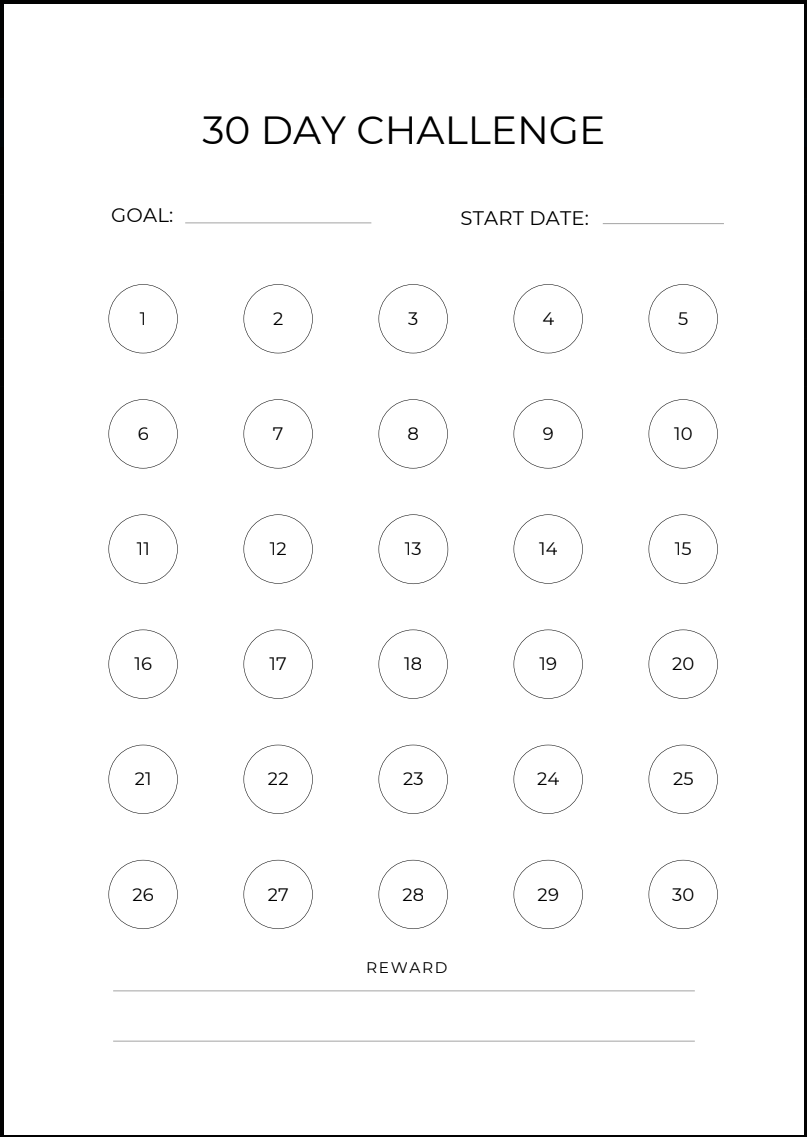
In this guide, you'll discover a practical step-by-step process for building habits that actually stick and become part of your routine for the long haul. Plus, be sure to grab the free 30 Day Challenge printable at the end of the article to help you stay motivated and track your progress.
Step 1: Focus on One New Habit
A concept known as “ego depletion” will be one of your biggest obstacles to habit formation.
Ego depletion is:
“A person’s diminished capacity to regulate their thoughts, feelings, and actions.”
Ego depletion impacts our ability to form new habits because our supply of willpower is spread out among all the areas of our lives.
Because of this, it’s important to work on only one habit at a time. That way, your store of willpower can be channeled into completing that one habit, increasing your odds of success.
So the question is:
“What one new habit do you want to form?”
Identify it now and learn everything you can about how to do it right. Become an expert in this activity and do a deep dive to self-educate yourself about this activity. Then you can move on to the next step.
Now, if you’re stuck on picking a specific habit, then I recommend checking out the following concepts on our website:
Step 2: Commit to a Minimum of 30 Days
Some people say it takes 21 days to build a habit, while others claim it takes up to 66 days. The truth is the length of time varies from person to person and habit to habit.
To learn more about the time it takes to build a habit, be sure to check out this video:
You will find that some habits are easy to build while others require more effort.
My advice is to commit to a specific habit for the next 30 days (or a month to keep it simple).
During this time, focus all your energy around completing this habit.
Step 3: Anchor Your New Habit to an Established Routine
A habit shouldn’t be based upon motivation, fads, or temporary desire. Instead, you should associate this habit with behavior that you already do.
To make this happen, we recommend using a strategy called “implementation intention” which is a statement where you describe the exact habit you will complete at a specific time and location.
To learn more, here is a video where we discuss the implementation intention technique:
To get started, you want to create a statement where you “anchor” a new habit to something you already do on a daily basis.
Here are a few examples:
You get the idea.
Simply find an established routine and then anchor the new habit to it.
Also, before we move on, another strategy we recommend is to create a “frictionless” environment where it’s easy to complete this new habit. In fact, we recommend that you use the “20 second rule” for any items related to this routine.
So watch this video to learn more about the “20 second rule” concept:
Step 4: Focus on Tiny Habits
The danger of relying on motivation alone is you don’t have a backup plan for those unexpected challenges in life.
So, the secret to lifelong habit formation is to take baby steps that turn a new habit into automatic behavior. You can do this by using the “tiny habit” strategy that B.J. Fogg describes in his book.
A tiny habit is a small change to your routine where you focus on staying consistent and never missing a day instead of committing to a lengthy, time-consuming change to your behavior.
For instance, here are a few examples of tiny habits you can build:
Sure, these activities might seem overly simplistic. But that’s why this is a powerful concept!
When it’s easy to get started, you will build momentum and will often do more of the habit than you originally intended.
Step 5: Don't Break the Chain
There’s a popular, habit-related story that supposedly involves the comedian Jerry Seinfeld.
When talking to a budding comedian, Seinfeld gave a simple piece of advice:
“Set aside time every day to create new material. The key here is to never miss a day, even if you’re not in the mood.”
At the start of every year, Seinfeld hangs a one-year calendar on his wall and makes a big red X on the calendar for every day he writes new comedy material.
He doesn’t have to write a lot of material every day. What’s important is to do something every single day, without fail.
His focus is to never break the chain.
Marking X’s on a calendar encourages you to complete your desired task every single day. The more you look at an unbroken string of red X’s, the more compulsion you’ll feel to get over any initial resistance and force yourself to get started.
This step will help eliminate the excuses we all make for skipping a day.
Yes, there will be days when you’re tired, busy, overwhelmed, sick, hungover, or depressed. All of these can be valid reasons to skip a habit. But if you focus on the baby steps that I just mentioned and never break the chain, then it will be easy to create a sticky habit.
And if you want to learn more about Jerry Seinfeld’s “Don’t Break the Chain” strategy, here’s a quick video you can watch:
Step 6: Plan for Obstacles and Challenges
Every new habit will have obstacles. But, you can plan for these challenges and learn how to effectively adapt to them.
To get started, here are a common obstacles that you might encounter:
- Not enough time
- Experiencing pain or fatigue
- Bad weather conditions
- Not enough room or space for the habit
- The cost of the equipment related to the habit
- Self-consciousness
A simple way to respond to obstacles is to prepare for them ahead of time. And you can do this by using the “If-Then Planning” strategy.
Here’s how to do it:
Whenever you encounter a challenge, use this experience to create an “If-Then” statement for how you’ll respond the next time it happens.
Here are a few examples:
Lastly, it’s important to have a plan for whenever you experience the “what the hell effect.” The following video explains what this is and how to deal with it:
Step 7: Track Your New Habit
The best way to stay committed to a habit is to track and make public declarations about this new behavior. According to the lessons learned from the Hawthorne effect, you’re more likely to follow through with a commitment when you’re being observed by others. So to stick with this new routine, let others know about your efforts and goals.
Here are a few days to do this:
Never underestimate the power of social approval. You will stay committed when you know that you will be held accountable for following through on a new habit.
Or if you’re not interested in public accountability, you should at least track this habit using one of these three tools:
- This free printable you can use to track seven different habits.
- 31 habit tracking templates and spreadsheets
- 31 bullet journal tracking ideas and layouts
Step 8: Reward Important Milestones
A new habit doesn’t have to be boring. Instead, you can build a reward system into the process, so you can celebrate those important milestones.
The reward you pick is up to you. You could check out a new movie, enjoy a night out with your significant other, or treat yourself to an item you’ve always wanted. To learn more, check out this article on 155 ways to reward yourself.
It’s easy to underestimate the value of having fun while building habits. Often, looking forward to a specific reward will help you overcome those challenging obstacles.
Step 9: Build a New Identity
The final step is to turn this habit into a core part of your identity. Only then will you stick to it without the constant need for reinforcement.
James Clear often talks about something he calls Identity-Based Habits. The idea here is you can build a lasting habit by making it a reflection of who you are on the inside.
Simply put:
You need to believe the habit is part of what makes YOU a unique person.
Clear recommends making the habit part of your identity and then use each “small win” as a way to demonstrate that it’s who you are on the inside.
Really, it starts with a shift of mindset.
With a new habit, reinforce this behavior by saying things like:
“I’m the type of person who loves to go running.”
Then, follow through by doing it on a daily basis.
Eventually, your internal identity will match this new habit.
Free Download: 30 Day Challenge
This 30 Day Challenge printable helps you stay accountable while building a new habit or working toward a specific goal. It provides a simple way to track daily progress, maintain consistency, and celebrate your achievements along the way.
Download the printable and start your next positive habit challenge today.
(The link opens up a Google Drive folder where you can get the PDF download in a variety of sizes: A4, A5, and US Letter.)
Start Building a New Habit TODAY
So there you have it… the nine step process to building a new habit.
Now it’s your turn…
To get started, I urge you to pick one habit right now, then make a commitment to focus on it for the next 30 days using the process that I just outlined.
Finally, if you want to learn more about the process of building habits, then here is a list of additional videos and articles you might find interesting: